Why Pride Still Matters
Pride is often understood as a celebration of identity. It is better understood as a celebration of personal autonomy.

Many years ago, during a visit to Berlin, my wife and I spent two full days in the German Historical Museum. I still remember the experience vividly. It is an extraordinary museum, not because it flatters the national past but because it confronts it with unusual honesty. We devoted most of the second day to the Nazi and Communist periods. Room after room, document after document, one encounters a history of persecution, ideological fanaticism, censorship, surveillance, conformity, imprisonment, and murder. Above all, one encounters a history of systematic attempts to subordinate the individual to some supposedly higher collective purpose: race, class, nation, party, state.
By the time we left the museum late in the afternoon, we were emotionally exhausted. There is a particular kind of fatigue that comes from spending hours in the company of human cruelty and political fanaticism. It is not merely intellectual. One carries it physically. We walked through the city center almost in silence.
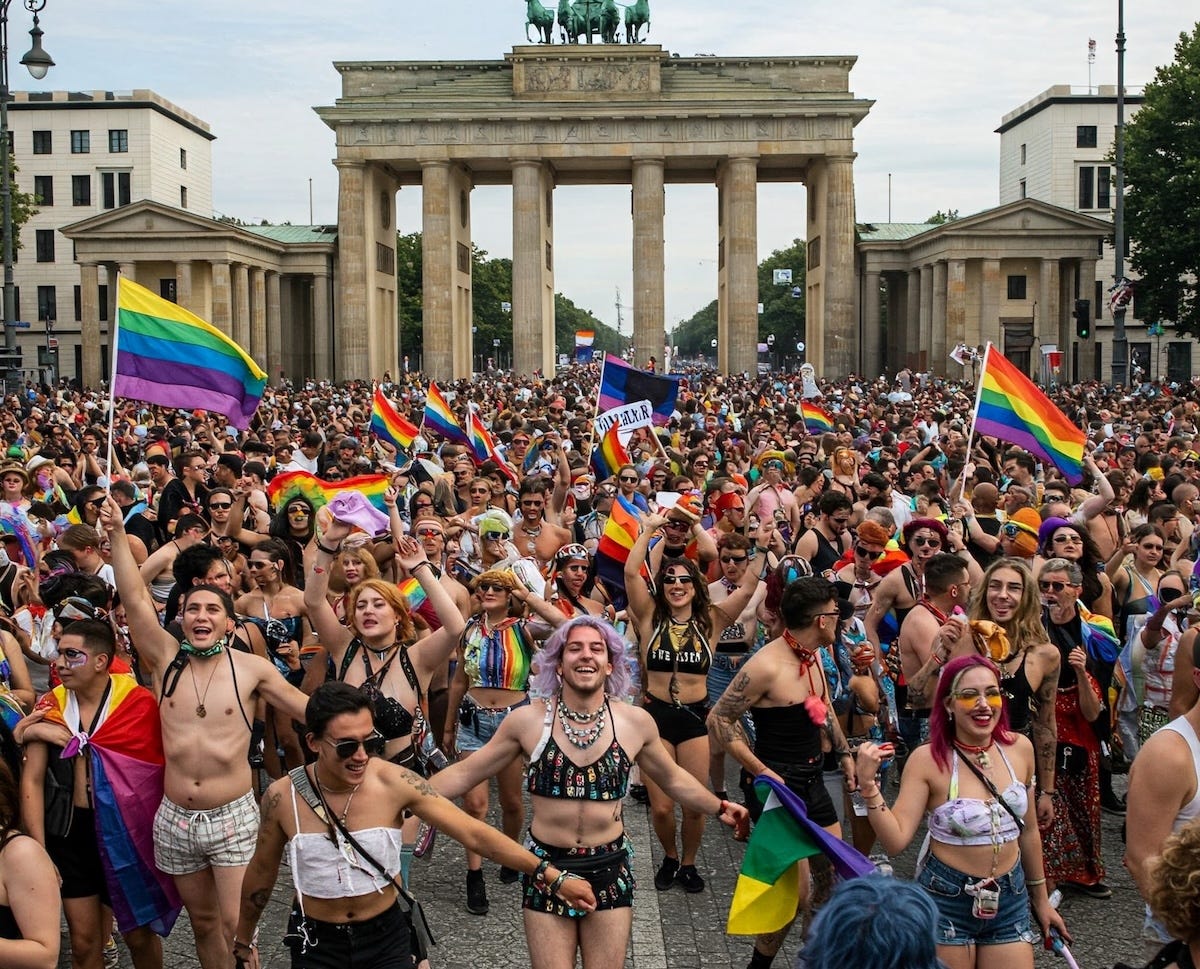
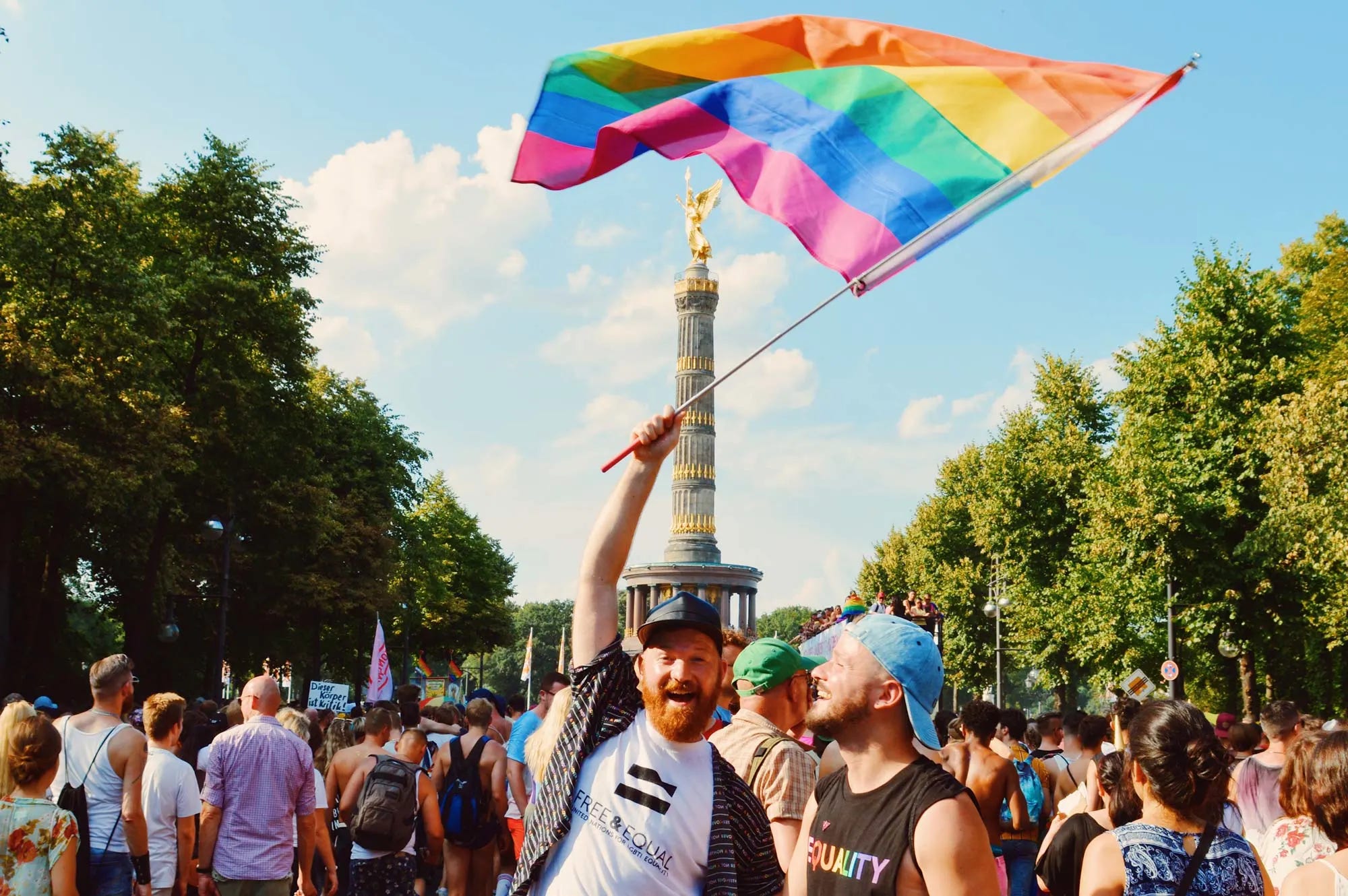
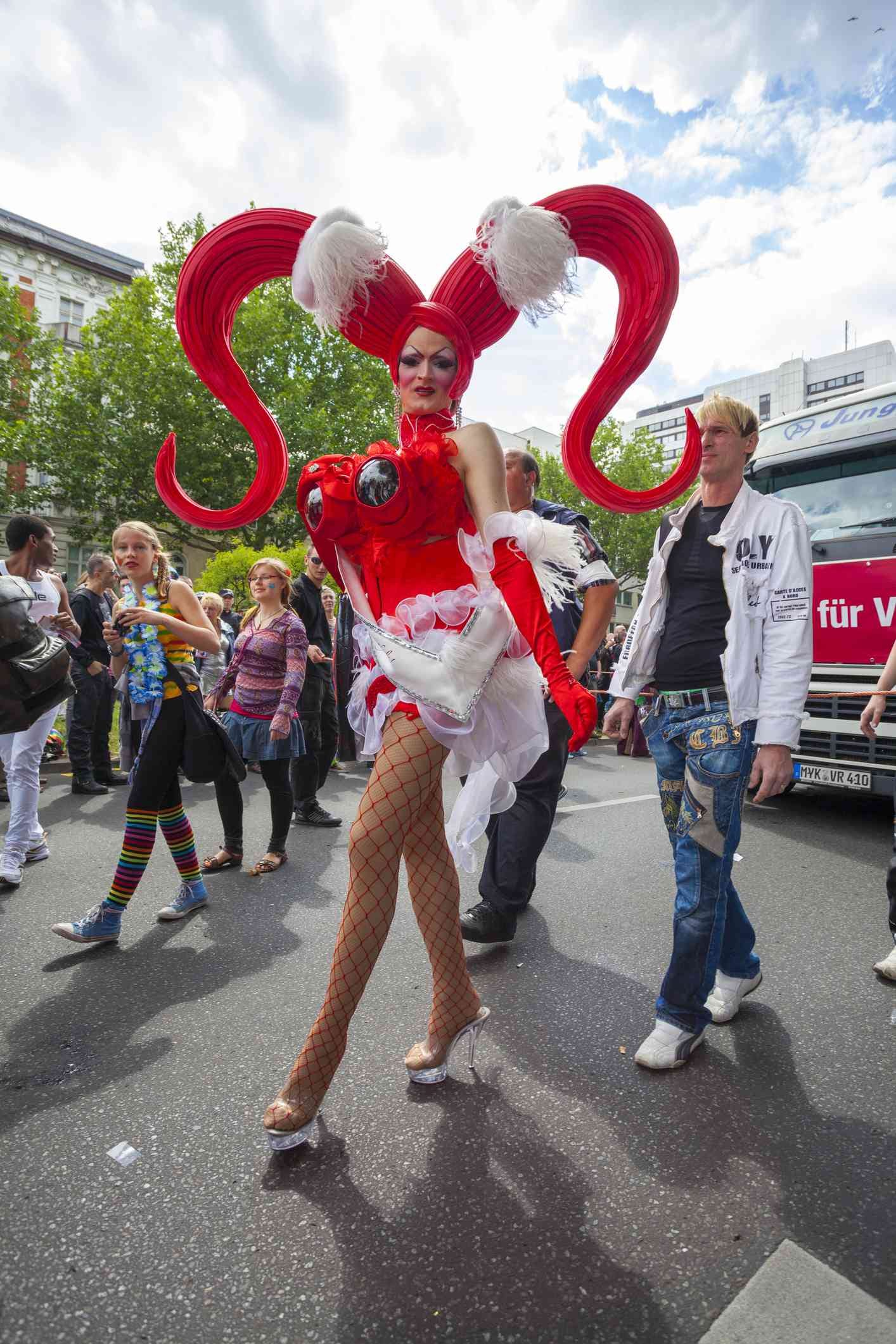
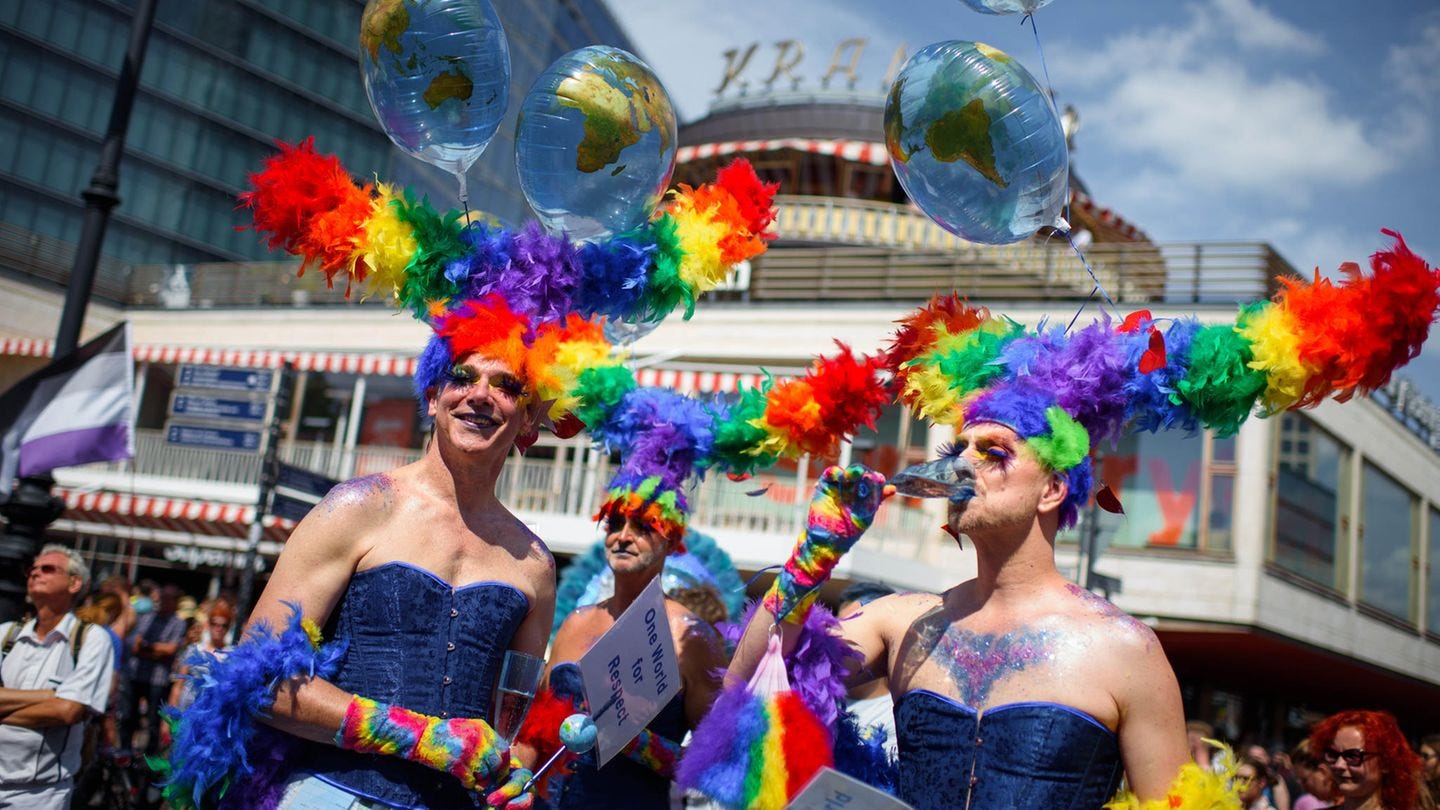
Then, gradually, the atmosphere changed. We began to hear music and shouting. Streets were filled with people. Colors appeared everywhere. At first, we assumed that soccer fans were celebrating a victory. It took us several minutes to realize that we had walked into the Berlin Pride parade.
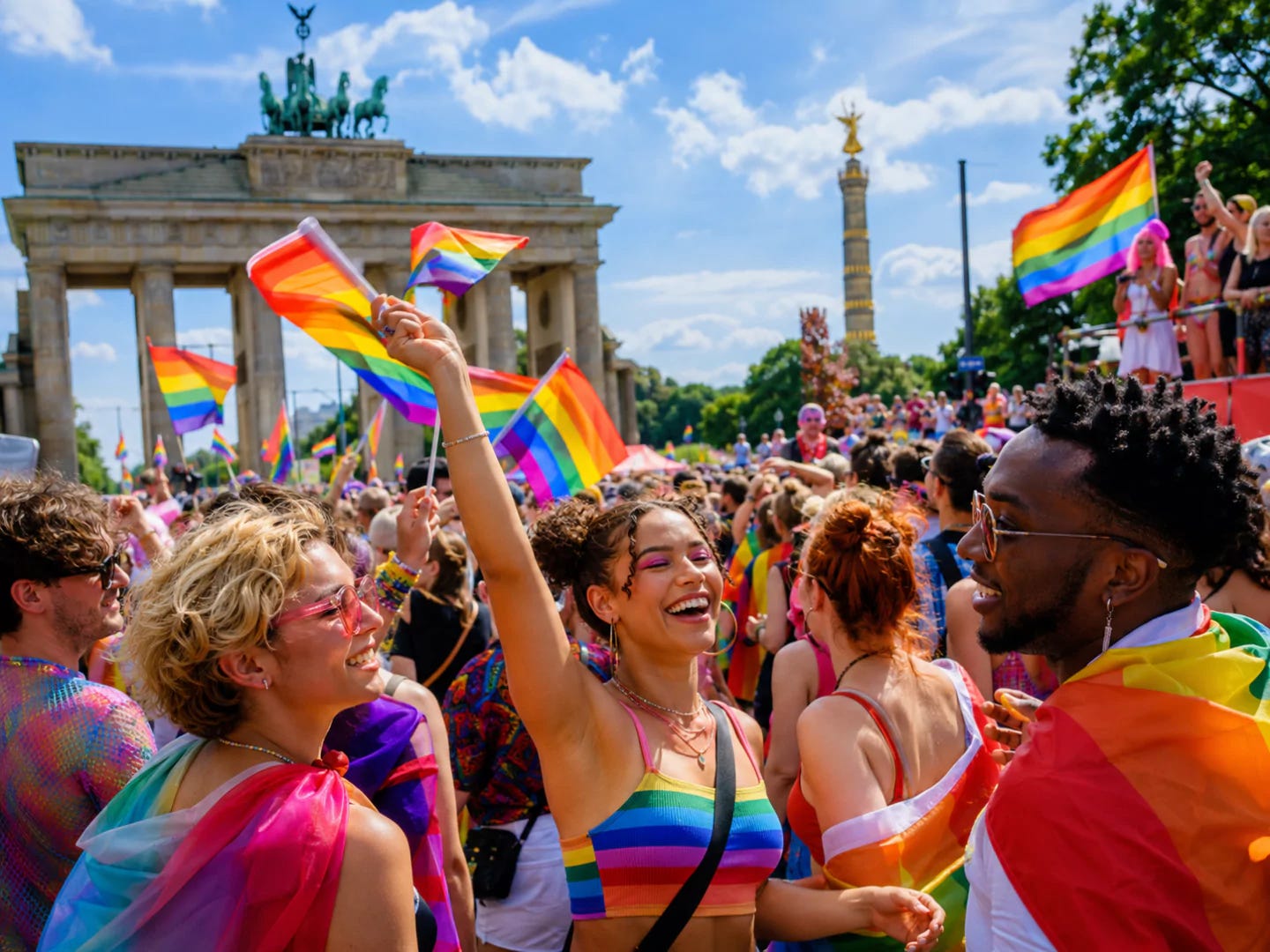
Neither of us had ever seen a Pride celebration before. We were therefore encountering it without preconceptions, and perhaps for that reason its effect on us was so powerful. Looking back, I find it difficult to describe exactly what happened. Nothing in particular caught my attention. I remember no speech, no slogan, no individual participant. What remains with me is a general impression, almost a sensation: the feeling that after spending an entire day contemplating the history of unfreedom, we had suddenly found ourselves in the presence of freedom itself.
When we returned to the hotel that evening, I remember saying that a parade had somehow succeeded in lifting from our shoulders the burden of sixty years of German totalitarianism. This was, of course, an exaggeration. History cannot be erased by an afternoon celebration. Yet there was something profoundly revealing in the contrast. A few hours earlier we had been examining political systems built upon obedience, conformity, and the suppression of difference. Now we were watching thousands of people publicly asserting their right to live as they wished and to stop apologizing for it. The connection between the two experiences seemed obvious.
It was only much later that I realized why so many people react negatively to Pride. Most critics imagine that what troubles them is sexuality. In reality, what troubles them is freedom.
The easiest way to see this is to listen carefully to the language they employ. They rarely speak about rights, constitutional principles, or equal citizenship. Instead, they complain about “provocation.” They insist that people should be more discreet. They object to visibility. They speak vaguely about moral decline, social disintegration, or the collapse of traditional values. What unites these complaints is not sexuality as such, but discomfort with individuals who refuse to organize their lives according to established expectations.
This discomfort is hardly new. Historically, demands for conformity have always been justified through the language of public morality, social order, religious truth, or collective necessity. The specific vocabulary changes. The underlying impulse remains remarkably constant. Free individuals are viewed as a problem whenever they exercise their freedom in ways that challenge prevailing norms.
What distinguishes a liberal society from an illiberal one is not the absence of such sentiments. Every society contains people who fear social change, dislike difference, or feel threatened by unfamiliar ways of living. The real distinction lies elsewhere. Liberal societies refuse to grant those sentiments political authority. They do not ask whether a particular way of life offends the majority. They ask whether free individuals respect the equal rights of others. If the answer is yes, the discussion is essentially over.
Critics often accuse liberals of inconsistency at this point. If we demand respect for everyone, are we not also obliged to respect those who disapprove of Pride? The answer is no. Liberalism requires respect for persons, not for every opinion they happen to hold. A bigot enjoys exactly the same rights as everyone else. What he does not enjoy is a right to have his prejudices accommodated. A person offended by Pride is entitled to his feelings, just as anyone is entitled to hold mistaken views. But he is not entitled to demand that others curtail their freedom in order to spare him offense. In a free society, offense is not an argument. It is simply a fact about someone’s emotional state.
This point is often misunderstood because liberty itself is misunderstood. Many people continue to believe that freedom is valuable only when exercised in ways they personally approve of. Yet a freedom that protects only approved behavior is not freedom at all. Nobody requires legal protection in order to conform. The entire purpose of liberty is to protect conduct that others dislike, disapprove of, ridicule, or condemn.
Seen from this perspective, Pride acquires a significance that extends far beyond questions of sexuality. What is being celebrated is not merely the right of gay men, lesbians, bisexuals, or transgender individuals to live openly. What is being celebrated is a more general principle: the right of human beings to define for themselves the shape of their own lives.
That principle lies at the heart of the liberal tradition. John Stuart Mill understood this better than anyone. The central argument of On Liberty is not simply that individuality is desirable. It is that societies prosper when individuals are free to experiment with different ways of living. Individuality is not merely a personal preference; it is a social good. It underlies freedom of conscience, freedom of expression, freedom of association, and every other liberty worth defending. It is also precisely what authoritarian movements, regardless of ideological persuasion, seek to suppress.
For this reason I have never regarded Pride primarily as a movement about identity. Its deeper significance lies elsewhere. It is one of the most visible contemporary expressions of a much older struggle between autonomy and conformity, between individual self-government and collective control. The participants may not describe it in these terms, and many would probably reject such a philosophical interpretation altogether. Nevertheless, that is what makes the event politically important.
What we witnessed in Berlin was not simply a celebration. It was a public demonstration of a society confident enough to allow its citizens to live openly as themselves. After a century marked by repeated attempts to subordinate individuals to grand ideological projects, that confidence seemed neither trivial nor inevitable.
Indeed, it struck me then, and it strikes me still, as one of the clearest signs of a genuinely free society.